Top Visualization Trends in Real Estate Development for 2026
Real estate development has always been a visual game, but in 2026, the rules have completely changed.
Buyers don’t want to imagine what a space might look like. They want to experience it before the foundation is even poured. That’s exactly why 3D architectural animation services have gone from a nice-to-have to a non-negotiable in how projects get marketed, funded, and sold.
Here are the top trends reshaping real estate visualization right now.
Top 10 Real Estate Visualization Trends for 2026
1. Animated Walkthroughs Are Now the Standard
Those times when some static views were all that was required to start a project have passed. In today’s world, investors and customers expect full animations complete with real-life lighting and shadow effects in room-by-room sequences.
Why it matters:
- Buyers connect emotionally faster
- Pre-sales close more quickly
- Stronger investor deck performance
Key features:
- Sunrise-to-dusk lighting
- Interior and exterior sequences
- Short-form social media cuts
2. VR Tours for Remote Buyers
Remote purchasing is completely normal in the US market now. A buyer in Chicago shopping for a condo in Miami doesn’t want to fly down just to look around; VR property tours solve that entirely.
Why it matters:
- Eliminates out of state challenges
- Makes the purchasing process much easier
- Effective for luxury projects
Key features:
- Provides 360-degree headset tour
- Realistic perception of the room size
- Does not require a physical showroom
3. AI-Powered Rendering — Better Output, Faster
AI is not replacing visualization artists, it is making them much faster and more efficient. Render jobs that used to take 48 hours are now completed in a fraction of the time, with cleaner and sharper results.
Why it matters:
- Faster turnaround on launches
- More revisions, same budget
- Cleaner final output quality
Key features:
- Auto noise reduction
- Real-time texture refinement
- More deliverables, lower cost
4. Drone Footage Combined with CGI
Studios are now taking actual drone footage of a development site, real sky, real streets, real surroundings and placing a CGI version of the future building directly into it. The result is incredibly convincing.
Why it matters:
- Most practical site preview method
- Shows actual environment surroundings
- Excellent for large-scale projects
Key features:
- Background with realistic aerial views
- Building created using CGI placed on the map
- Accurate light and shadow effects
5. Interactive Floor Plan Tools on Websites
PDF floor plans are quickly becoming outdated. Developers are embedding interactive 3D floor plan explorers directly on project websites and buyers are spending significantly more time engaging with them.
Why it matters:
- Helps retain buyer interest longer
- Decreases the number of follow-up phone calls
- Increases chances of converting inquiries into sales
Key features:
- Switch between unit types
- Quickly switch finishes
- See where furniture will go
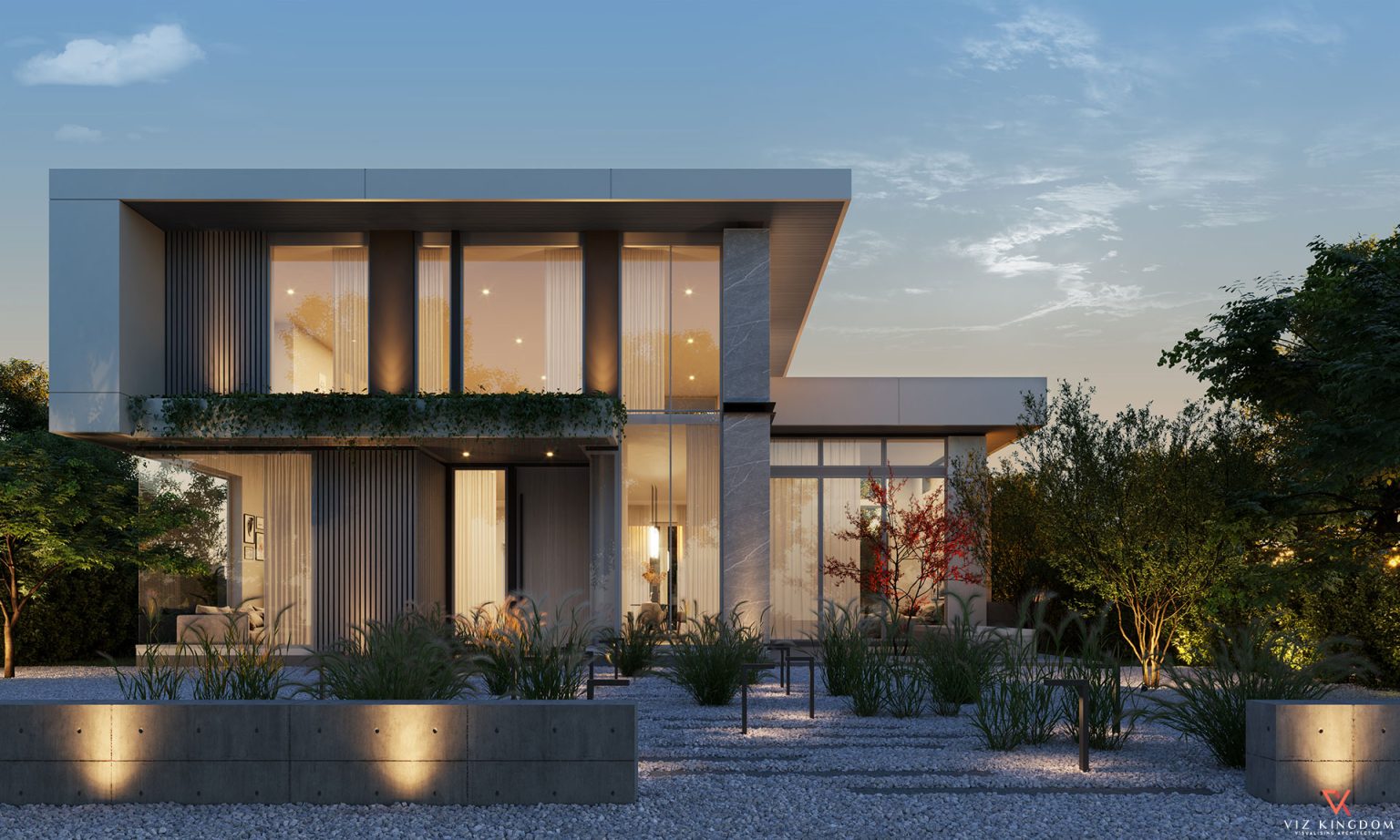
6. Twilight and Dusk Renders for Marketing
The best-performing real estate visuals are almost always shot at golden hour and that applies equally to renders. Twilight visuals with warm glows and dramatic skies consistently outperform daytime imagery in marketing.
Why it matters:
- Greater emotional impact
- More effective digital advertising
- For luxury projects
Key features:
- “Golden Hour” lighting settings
- Warm interior lighting
- Instagram/ads optimized
7. Visualizing Sustainability Features
Referencing “LEED-certified” in brochures does not carry the same impact that it once did. As we approach 2026, buyers will be looking to see these green aspects such as solar panels and EV charging and green rooftops highlighted within the renderings.
Why it matters:
- ESG buyers are visual
- Meets regulatory requirements
- Market differentiator
Key features:
- Solar & EV highlights
- Clearly rendered green roof
- Works for regulatory submissions
8. Real-Time Rendering in Client Meetings
Architects are able to use software such as Unreal Engine and Lumion to make real-time adjustments to colors, materials, and designs as they explain their ideas to clients. The graphics will update in front of their eyes instantly.
Why it matters:
- Meetings become more decisive
- Ends endless revision cycles
- Positions studio as tech-forward
Key features:
- Live material and color swaps
- Zero re-render wait time
- Large screen real-time display
9. Cinematic-Style Project Videos
In 2026 the most powerful real estate videos will be mini movies. People walking into their house, the sun coming through their kitchen, kids playing in the yard. All with music, voice-over, and color correction from 3D animation.
Why it matters:
- Storytelling helps create purchase decisions
- Successful on YouTube and Meta
- Best for launch events
Key features:
- Lifestyle storytelling
- Quality sound and voiceover
- Multi-platform ready
10. Partnering With a 3D Architectural Visualization Studio in India
US-based developers are increasingly working with Indian visualization studios and not just for cost reasons. The quality, communication, and workflow structure have genuinely reached an international standard.
Why it matters:
- 40–60% cost savings consistently
- Overnight turnaround time advantage
- High volume, no quality drop
Key features:
- Stills, animation, VR exports
- Dedicated project managers
- Built for US market delivery
Common Mistakes to Avoid
- Going cheap on renders: poor visuals damage brand credibility before a buyer reads a single word
- Starting too late: visualization should begin at design development, not after permits are signed
- One asset for every channel: social clips and investor decks need completely different formats
- Ignoring Social media: most buyers first see your project on a phone; heavy files kill engagement instantly
- Not updating visuals when designs change: outdated renders mislead buyers and create real liability
Final Thoughts
Visualization in real estate isn’t just a design tool anymore; it’s a sales weapon. From AI-enhanced renders to cinematic animations and VR walkthroughs, developers who invest in quality visualization are seeing faster pre-sales, better investor buy-in, and stronger brand positioning.
If you are looking for a trusted 3D architectural visualization studio in India that delivers world-class results for the USA market, VizKingdom brings the creativity, technology and turnaround speed your projects deserve.
FAQs
1. What is 3D architectural animation?
3D architectural animation is the creation of a presentation of buildings and other developments in the form of movement, where the project can be seen in walk-throughs, fly-throughs and storytelling even before it is finished.
2. What is the difference between 3D architecture rendering and 3D architecture animation services?
3D architectural rendering provides a high-resolution image of the project, whereas 3D architectural animation services provide moving videos showing different views of the property.
3. Why architectural visualizations important for real estate marketing?
Architectural visualization helps in making people understand the project better, building up trust, engaging customers, and making the purchasing process faster.
4. How virtual reality can help real estate developers?
Virtual reality allows viewing a property remotely and getting immersed into this experience and makes a project presentation better.
5. What is a digital twin in real estate?
Digital twin is a digital replica of the building that matches the real world.
6. What visualization trend will become more popular in 2026?
The trends of interactive and real-time visualization, VR tour, and AI rendering will show maximum growth in 2026.
Testimonials

Viz Kingdom work has become an essential part in Sameer Design consultants architectural work presentations. The quality of 3D renderings are high with reasonable prices. Viz Kingdom team quickly understands our architectural 3D comments and not only respond accordingly, but also add their inputs to come up with quality work within a short period of time. I highly recommend them.
Sameer Akbar, UAE
Professional service with excellent results. We used Viz to produce 3D architectural renderings for a development project. This was used in marketing materials and greatly assisted in our sales strategy. We have used them now for several projects and would recommend them strongly.
Binoy Karia, UK

I am a professional sculptor who creates monuments in outdoor public spaces. Therefore, I needed architectural 3D design renderings which depicted my sculptures within the future environmental settings where they will permanently reside. I was referred to Viz Kingdom via a mutual business associate, and I was not disappointed. They were very accommodating with all of my requests, even though I provided them with very short notice of my project. They took direction well, were very accessible (despite being overseas), and were also good at anticipating my design objectives. As an artist, it is important for me to collaborate with those who have ann ability to easily interpret my concepts, and this company seamlessly proved strong in that regard. I would definitely recommend their architectural visualization services to my fellow associates.
Alvin, New Jersey, USA
Kaushik and his team have served me and my clients very well over the years. Since we started working together several years ago Kaushik and his team have never failed to amaze me with their level of quality and attention to detail. Their work is amazing and highly effective for helping clients and contractors visualize our vision for various commercial and residential projects. It is without any reservations that I recommend Kaushik and his team to help you with professional renderings. 5 STARS!
Frank Cunha III, USA
My journey with Vizkingdom began with a simple search for 3D animation walkthrough services. However, it quickly evolved into a truly rewarding and collaborative experience. The team's genuine passion for architectural visualization was evident from the outset, and their enthusiasm was contagious. The final product exceeded my expectations and served as a powerful tool for effectively communicating my design intent to stakeholders and potential investors. Their dedication to clear communication and unwavering commitment to client satisfaction ensured a smooth and successful project from start to finish.
Creative Grid 7, Australia
Viz Kingdom's communication was excellent throughout the entire project. They kept me updated on the progress and made sure I was happy with the final results.
Zaga Skerletovic, USA

Very professional services, quick turn-around, great 3D visualization services, outstanding architectural 3D renderings
Bill Brown, USA
"I had a rather challenging backyard project that Kaushik @Viz Kingdom remarkably delivered from scratch. He was very patient to listen to my concerns and execute likewise. I can’t think of a better visualization than this. I would certainly recommend him for his expertise in 3d visualization eyes closed. Also would like to work with him in my future projects as well."
Abhilash Raveendran, Senior coordinator at Ceeyem, India

"I am working with Viz Kingdom since August 2017. He has always provided me high-end architectural visualization. Even without any meeting to discuss work or telephonic explanation of work he has understood the work very well and has given us the desired output. He has always achieved to deliver the renders on time, without exception. I definitely recommend him for his expertise in the work he does."


 USA
USA UK
UK Australia
 UAE
UAE Canada
 Spain
Spain