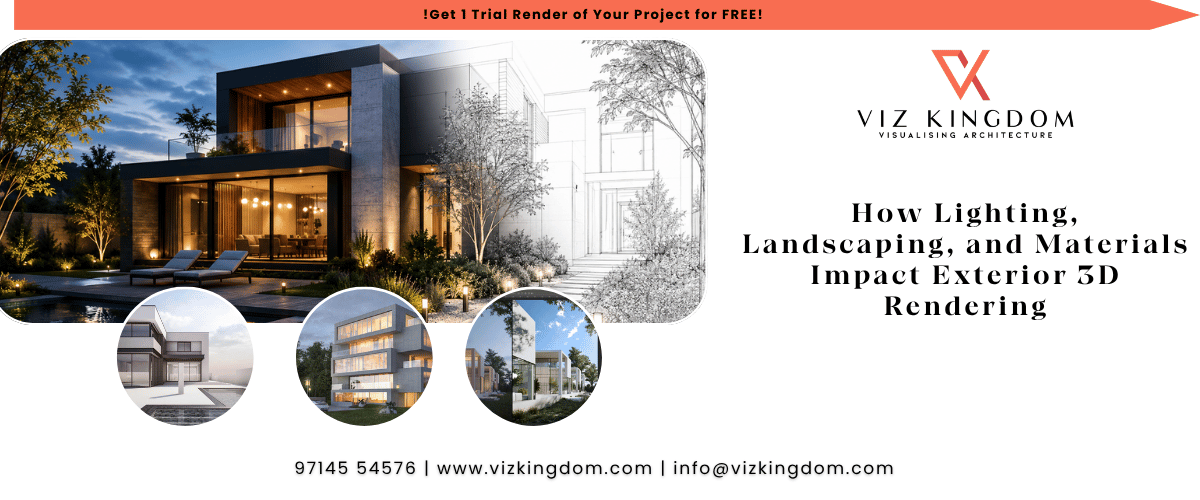
How Lighting, Landscaping, and Materials Impact Exterior 3D Rendering
When people look at a property online, they decide within seconds whether it feels attractive, modern, luxurious, or forgettable.
That decision usually has nothing to do with floor plans or technical details.
It’s all about the visuals.
And in the world of architectural visualization, three things make the biggest difference:
- Lighting
- Landscaping
- Materials
Together, they turn an average render into a photorealistic experience that captures attention and builds trust.
At Vizkingdom, we help U.S. architects, builders, and real estate developers create immersive visuals through the best 3d exterior design rendering services that drive engagement and property sales.
Let’s break down how these three elements completely transform exterior 3D rendering.
What Is Exterior 3D Rendering?
Exterior 3D rendering is the process of creating realistic digital visuals of a building’s exterior before construction is completed.
These renderings include:
- Architecture
- Lighting
- Landscaping
- Materials and textures
- Environment and surroundings
Unlike 2D drawings, 3D renderings help people feel the project.
That’s why:
- Properties with high-quality visuals get up to 118% more online views
- Real estate listings with 3D visuals generate significantly more inquiries
Why Lighting, Landscaping, and Materials Matter So Much
Anyone can create a basic 3D model.
But realistic rendering? That’s where expertise matters.
Lighting, landscaping, and materials create:
- Depth
- Realism
- Emotion
- Luxury perception
- Buyer trust
Without them, renderings look flat and artificial.
With them, renderings feel alive.
The Impact of Lighting in Exterior 3D Rendering
Lighting is one of the most important parts of architectural visualization.
It controls:
- Mood
- Realism
- Shadows
- Atmosphere
- Emotional appeal
Understanding Lighting in Architectural Visualization
Professional rendering artists simulate real-world lighting behaviour.
This includes:
- Sun direction
- Reflection
- Ambient lighting
- Shadow softness
Realistic lighting dramatically improves visual quality.
Types of Lighting Used in Exterior Renderings
Natural Lighting
Natural sunlight creates realism.
Popular approaches include:
- Morning light
- Sunset “golden hour”
- Cloudy weather mood
- Seasonal lighting effects
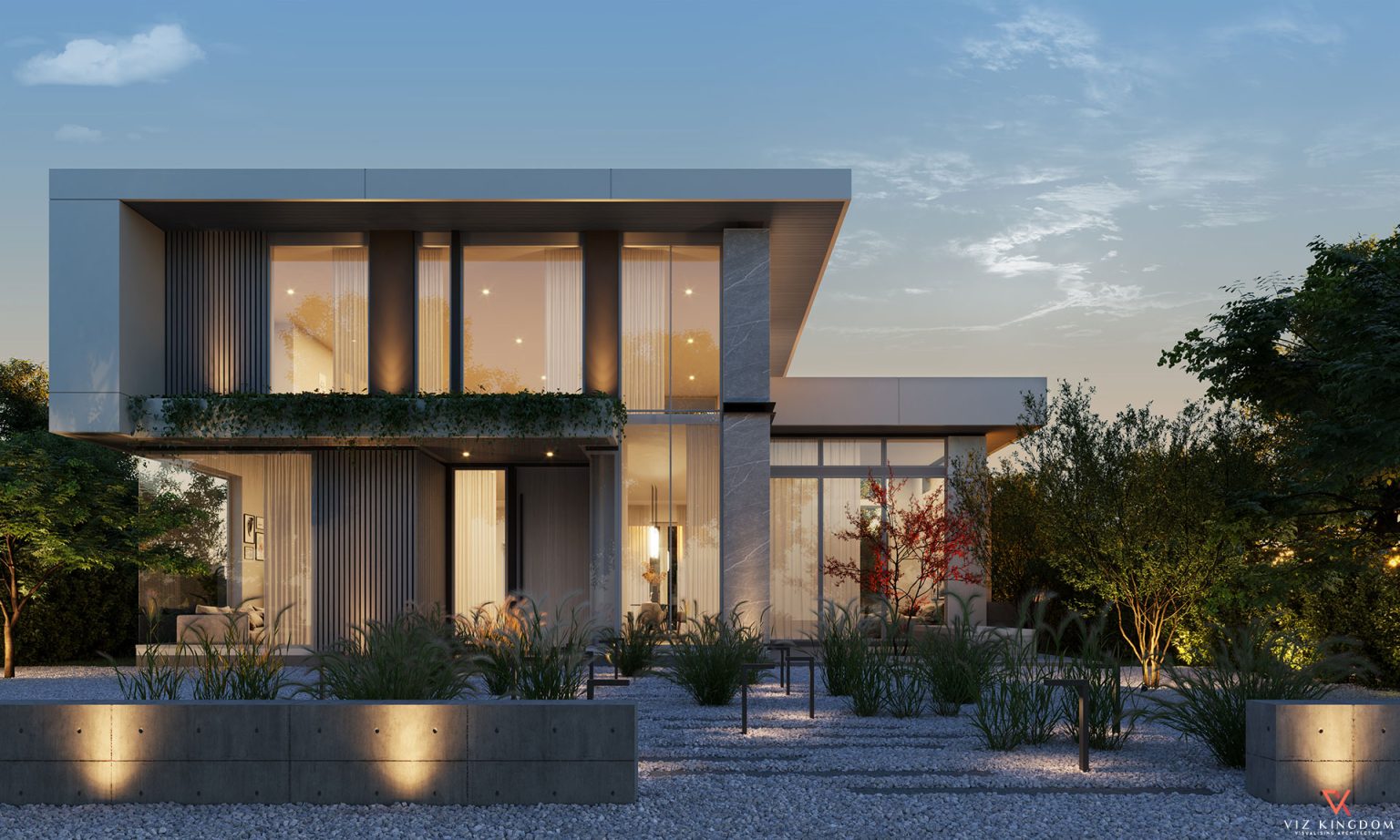
Golden hour renders are especially popular because they create warmth and luxury appeal.
Artificial Lighting
Artificial lighting adds depth and elegance.
Examples:
- Exterior wall lights
- Garden lighting
- Pathway illumination
- Interior glow through windows
Night renders with proper lighting often create a premium emotional appeal.
How Lighting Affects Realism
Lighting influences:
- Shadow depth
- Surface reflections
- Texture visibility
- Spatial perception
Bad lighting makes even expensive architecture look cheap.
Great lighting creates an emotional impact instantly.
Emotional Impact of Lighting
Studies show:
- Warm lighting increases emotional connection
- Luxury properties perform better with cinematic lighting setups
This is why premium renderings focus heavily on mood.
Common Lighting Mistakes
Avoid:
- Overexposed scenes
- Harsh shadows
- Flat daylight rendering
- Unrealistic nighttime lighting
These instantly reduce realism.
The Impact of Landscaping in Exterior 3D Rendering
Landscaping does more than decorate a scene.
It tells a lifestyle story.
Why Landscaping Matters
Buyers don’t just buy buildings.
They buy:
- Atmosphere
- Comfort
- Outdoor experience
- Lifestyle
That’s why landscaping strongly influences first impressions.
Key Landscaping Elements
Professional renderings include:
- Trees and plants
- Grass and gardens
- Pathways
- Outdoor seating
- Pools and water features
- Vehicles and people
These details make spaces feel lived-in and realistic.
How Landscaping Enhances Realism
Landscaping helps:
- Add scale and proportion
- Improve environmental integration
- Create visual balance
Without landscaping, renderings feel empty and unnatural.
Landscaping Trends in the USA
Current U.S. rendering trends include:
- Sustainable landscaping
- Outdoor entertainment spaces
- Luxury pool environments
- Smart garden concepts
Modern buyers expect exterior environments to feel premium.
Common Landscaping Mistakes
Avoid:
- Overcrowded greenery
- Unrealistic vegetation
- Ignoring local climate
- Generic landscaping assets
Poor landscaping lowers credibility quickly.
The Impact of Materials in Exterior 3D Rendering
Materials define how realistic a building feels.
And buyers notice material quality immediately.
Why Materials Matter
Materials affect:
- Architectural style
- Luxury perception
- Texture realism
- Buyer trust
Low-quality textures instantly make renders look fake.
Common Exterior Materials Used
Popular materials include:
- Concrete
- Glass
- Wood
- Brick
- Stone
- Metal panels
Each material reacts differently to lighting and reflections.
Material Texturing Techniques
Professional renderings use advanced techniques like:
- Bump mapping
- Reflection maps
- Surface imperfections
- PBR (Physically Based Rendering)
These small details create realism.
How Materials Influence Visual Appeal
Materials communicate:
- Modern design
- Luxury aesthetics
- Sustainability
- Architectural identity
For example:
- Matte concrete = modern minimalism
- Natural wood = warmth and comfort
- Glass facades = premium commercial appeal
Common Material Mistakes
Avoid:
- Overly shiny surfaces
- Repeating texture patterns
- Low-resolution materials
- Unrealistic reflections
These instantly reduce quality perception.
How Lighting, Landscaping, and Materials Work Together
The magic happens when all three work together.
Lighting enhances materials.
Landscaping frames architecture.
Materials respond to light naturally.
Together, they create:
- Photorealism
- Emotional engagement
- Stronger buyer connection
This is what separates average visuals from the best 3d exterior design rendering services.
How Realistic Renderings Help Sell Properties Faster
Realistic rendering directly impacts sales performance.
According to industry data:
- Visual content improves engagement by 2x
- Properties with strong visuals sell up to 30% faster
- Buyers are more likely to inquire when renderings feel realistic
Photorealistic rendering reduces uncertainty and builds confidence.
Cost vs ROI of High-Quality Exterior Rendering
Yes, premium rendering costs more upfront.
But the ROI is significant:
- Faster approvals
- Better marketing
- Higher engagement
- Increased conversions
Many U.S. companies outsource rendering to India to save up to 60% while maintaining global quality standards.
Common Mistakes Businesses Make
Avoid:
- Choosing providers based only on price
- Ignoring realism
- Over-editing visuals
- Using poor-quality textures
The provider you choose matters enormously.
Future Trends in Exterior 3D Rendering
The future includes:
- AI-powered rendering
- Real-time visualization
- VR and AR integration
- Interactive rendering experiences
The industry is moving toward even more immersive visuals.
FAQs
Why is lighting important in exterior 3D rendering?
Lighting creates realism, mood, depth, and emotional appeal in architectural visualization.
How does landscaping improve 3D renderings?
Landscaping adds realism, lifestyle appeal, scale, and environmental context.
What materials look most realistic in architectural rendering?
Glass, stone, wood, brick, and concrete look highly realistic when properly textured and lit.
Can realistic renderings help sell properties faster?
Yes. Realistic visuals improve engagement, build trust, and increase buyer interest.
What software is used for exterior rendering?
Popular tools include 3ds Max, V-Ray, Lumion, Unreal Engine, and Corona Renderer.
Conclusion
In modern architectural visualization, realism is everything.
And realism comes from mastering:
- Lighting
- Landscaping
- Materials
These three elements transform simple 3D models into immersive experiences that attract buyers, impress investors, and elevate brands.
At Vizkingdom, we specialize in delivering the best 3d exterior design rendering services for U.S. architects, developers, and real estate professionals looking to stand out in competitive markets.
Because great design deserves great visualization.
Testimonials

Viz Kingdom work has become an essential part in Sameer Design consultants architectural work presentations. The quality of 3D renderings are high with reasonable prices. Viz Kingdom team quickly understands our architectural 3D comments and not only respond accordingly, but also add their inputs to come up with quality work within a short period of time. I highly recommend them.
Sameer Akbar, UAE
Professional service with excellent results. We used Viz to produce 3D architectural renderings for a development project. This was used in marketing materials and greatly assisted in our sales strategy. We have used them now for several projects and would recommend them strongly.
Binoy Karia, UK

I am a professional sculptor who creates monuments in outdoor public spaces. Therefore, I needed architectural 3D design renderings which depicted my sculptures within the future environmental settings where they will permanently reside. I was referred to Viz Kingdom via a mutual business associate, and I was not disappointed. They were very accommodating with all of my requests, even though I provided them with very short notice of my project. They took direction well, were very accessible (despite being overseas), and were also good at anticipating my design objectives. As an artist, it is important for me to collaborate with those who have ann ability to easily interpret my concepts, and this company seamlessly proved strong in that regard. I would definitely recommend their architectural visualization services to my fellow associates.
Alvin, New Jersey, USA
Kaushik and his team have served me and my clients very well over the years. Since we started working together several years ago Kaushik and his team have never failed to amaze me with their level of quality and attention to detail. Their work is amazing and highly effective for helping clients and contractors visualize our vision for various commercial and residential projects. It is without any reservations that I recommend Kaushik and his team to help you with professional renderings. 5 STARS!
Frank Cunha III, USA
My journey with Vizkingdom began with a simple search for 3D animation walkthrough services. However, it quickly evolved into a truly rewarding and collaborative experience. The team's genuine passion for architectural visualization was evident from the outset, and their enthusiasm was contagious. The final product exceeded my expectations and served as a powerful tool for effectively communicating my design intent to stakeholders and potential investors. Their dedication to clear communication and unwavering commitment to client satisfaction ensured a smooth and successful project from start to finish.
Creative Grid 7, Australia
Viz Kingdom's communication was excellent throughout the entire project. They kept me updated on the progress and made sure I was happy with the final results.
Zaga Skerletovic, USA

Very professional services, quick turn-around, great 3D visualization services, outstanding architectural 3D renderings
Bill Brown, USA
"I had a rather challenging backyard project that Kaushik @Viz Kingdom remarkably delivered from scratch. He was very patient to listen to my concerns and execute likewise. I can’t think of a better visualization than this. I would certainly recommend him for his expertise in 3d visualization eyes closed. Also would like to work with him in my future projects as well."
Abhilash Raveendran, Senior coordinator at Ceeyem, India

"I am working with Viz Kingdom since August 2017. He has always provided me high-end architectural visualization. Even without any meeting to discuss work or telephonic explanation of work he has understood the work very well and has given us the desired output. He has always achieved to deliver the renders on time, without exception. I definitely recommend him for his expertise in the work he does."

 USA
USA UK
UK Australia
 UAE
UAE Canada
 Spain
Spain