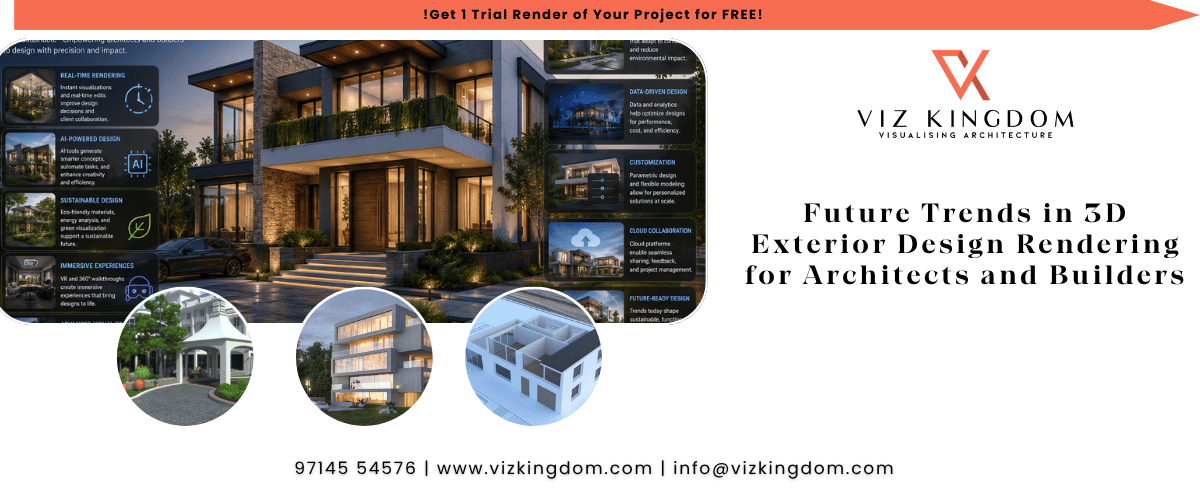
Future Trends in 3D Exterior Design Rendering for Architects and Builders
The architecture and construction world in the USA is moving fast. Clients no longer show up to meetings happy with flat sketches or basic blueprints. They want to see their project- the textures, the lighting, the landscaping, all of it, before a single shovel hits the ground. That’s exactly why 3D exterior design rendering services have gone from a nice extra to a flat-out necessity for architects and builders who want to stay competitive.
Here’s where things are headed.
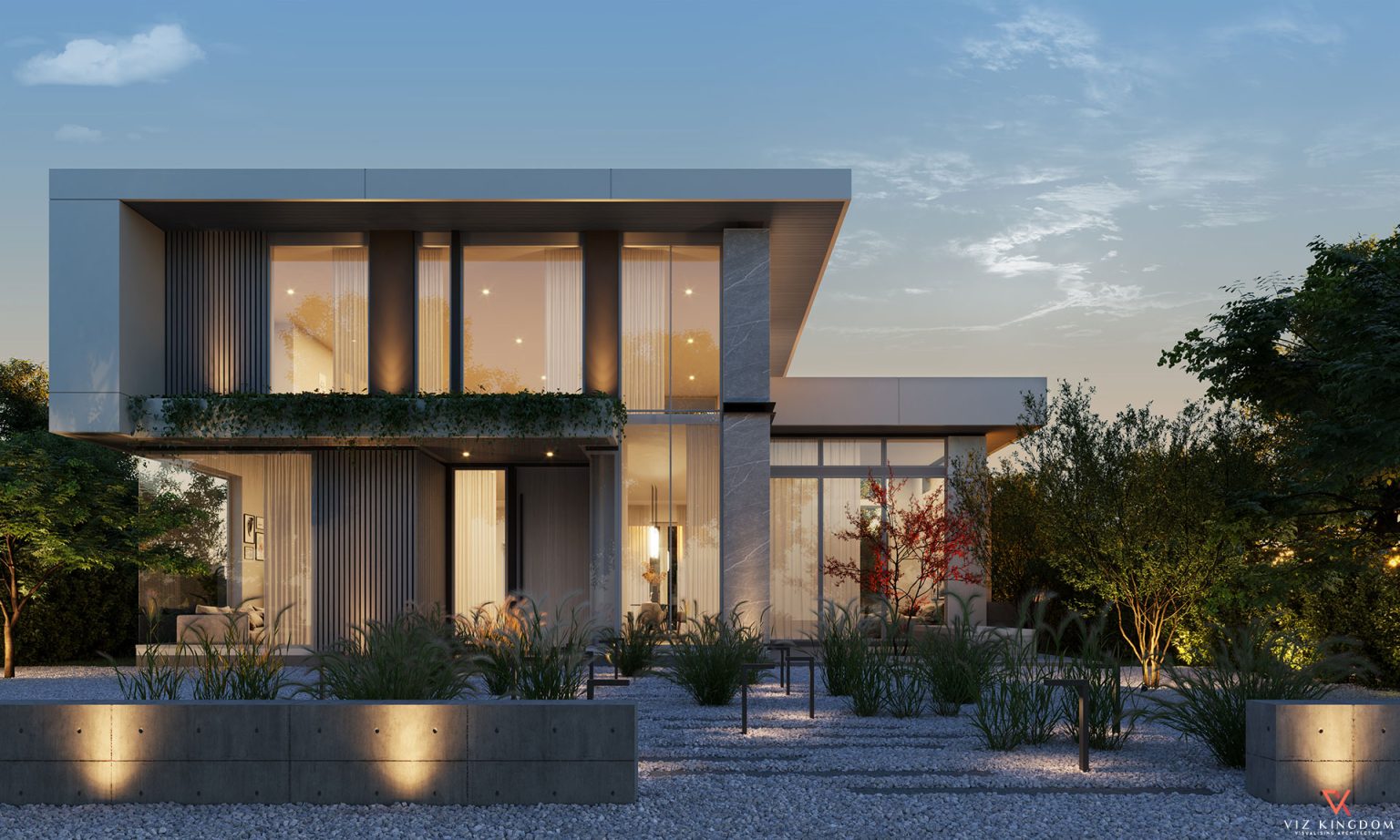
Hyper-Realistic Visualizations Will Become the Standard
Photorealistic renders used to be a luxury. Now clients expect them, and the bar keeps rising. In the future, rendering techniques will pay even more attention to minor details that can give the impression of realism in designs, such as:
- Realistic sunlight dependent on location and the time of the day
- Realistic textures of various materials such as wood, stone, glass, and concrete
- Dynamic lighting dependent on the surrounding conditions
- Realistic landscaping, shadow, and reflections
- People and movements making scenes come to life
The closer a rendering resembles a photograph, the better a client understands the project, becomes more confident in their choices, and asks for fewer changes. That’s a win for everyone on the project.
Real-Time Rendering Will Speed Up Decision-Making
Waiting days for a revised render after a client asks to swap out the roofing material? That’s becoming a thing of the past. Real-time rendering lets architects make live changes during the actual meeting, right in front of the client.
For builders and developers in the USA, where time is money, this matters a lot:
- Fewer back-and-forth revision cycles
- Faster project approvals
- Better communication between design and construction teams
- More flexible presentations that respond to client feedback on the spot
Firms that offer real-time capabilities through their 3D exterior design rendering services are going to have a serious edge in winning and keeping clients.
Virtual Reality and Walkthrough Experiences Will Grow
A flat image can show what a building looks like. A VR walkthrough lets clients feel like they’re already standing outside it. That’s a completely different level of engagement, and it’s catching on fast across the USA.
VR is especially powerful for:
- Luxury custom homes where buyers are deeply emotionally invested
- Commercial and mixed-use developments with complex outdoor layouts
- Hotels, resorts, and hospitality projects
- Real estate pre-sales and investor presentations
As VR headsets get cheaper and more mainstream, expect this to shift from a premium add-on to a standard part of how architectural firms present exterior designs.
Artificial Intelligence Will Boost Rendering Efficiency
AI is not meant to replace architects or designers. Rather, it allows for the automation of repetitive and time-consuming tasks, enabling architects and designers to devote more time to their creativity.
Some of the things AI can do today include:
- Lighting adjustments
- Material and texture selection
- Background and landscaping creation
- Improvement of rendering efficiency
For architectural design firms working on numerous projects at once, AI enables them to save time and produce designs in less time while maintaining quality.
Drone Integration Will Enhance Site Visualization
Drone footage is changing how sites get captured and how renderings get built around real-world context. Instead of relying on static maps, architects can now pull actual aerial scans of a property and build their 3D model around it.
This helps clients see:
- Exactly how the building sits on the lot
- Surrounding roads, buildings, and infrastructure
- Site elevation changes and terrain
- How the project integrates into the neighbourhood visually
For large residential communities or commercial developments, this level of site accuracy makes presentations much more persuasive, especially with investors and city planning boards.
Sustainable Design Visualization Will Become More Important
Green building isn’t a talking point anymore; it’s a priority for a large chunk of American builders and buyers. Clients want to see how eco-friendly features actually look on the finished structure, not just read about them in a spec sheet.
Future exterior renders will more commonly showcase:
- Solar panel placement and integration
- Green roofs and living walls
- Natural ventilation design
- Energy-efficient lighting layouts
- Native and drought-resistant landscaping
For projects going after LEED certification or marketing themselves on sustainability, quality renderings make those features tangible and visually compelling.
Interactive 3D Presentations Will Replace Static Images
Static renders are starting to feel outdated when clients can interact with a design directly in a browser. Interactive presentations let users take control of the review process:
- Rotate and view the building from any angle
- Toggle between day and night lighting
- Compare material and colour options side by side
- Explore seasonal landscaping changes
- Zoom into specific architectural details
For real estate developers, this kind of tool doesn’t just impress clients, but it becomes a marketing asset that attracts buyers and investors before the project is even off the ground.
How Cloud Collaboration Will Improve Teamwork
In big construction projects, there are lots of people involved, and they all work from various places. The cloud-based rendering platforms help these architects, engineers, builders, and clients collaborate easily without lengthy email threads or misunderstandings.
The advantages are:
- Fast updating and sharing of renderings
- Easy review and approval of the same, no matter what device is used
- Improved teamwork in real-time and from various locations
- Secure storage of big project files
Final Thoughts
The future of 3D exterior design rendering services is not only about improving the look of the images. It’s all about smarter workflows, stronger client communication, and presentations that actually move projects forward. Architects and builders who lean into these trends like real-time rendering, VR, AI tools, and interactive platforms are going to win more pitches, reduce costly revisions, and deliver a project experience that stands out in a crowded market. The technology is here. The question is who’s going to use it first.
FAQs
Q: What are 3D exterior design rendering services?
It provides realistic images of the exterior of a structure even before its construction begins, so that clients can see what their completed structure looks like.
Q: What is the need for 3D exterior rendering services?
It is used to explain design concepts, achieve faster client approvals, reduce last-minute changes, and improve presentations.
Q: What is the cost of 3D exterior rendering services in the USA?
This depends on the project size, detail and the number of views needed. Most residential projects cost less than large commercial ones.
Q: How long does a 3D exterior rendering take?
Mostly it is completed within 3-7 working days, depending on complexity and revision needs.
Q: What is the difference between 3D rendering and VR walkthroughs?
3D rendering is a realistic view of the exterior of the building, whereas a VR walkthrough allows clients to explore the property virtually in a more interactive way.
Testimonials

Viz Kingdom work has become an essential part in Sameer Design consultants architectural work presentations. The quality of 3D renderings are high with reasonable prices. Viz Kingdom team quickly understands our architectural 3D comments and not only respond accordingly, but also add their inputs to come up with quality work within a short period of time. I highly recommend them.
Sameer Akbar, UAE
Professional service with excellent results. We used Viz to produce 3D architectural renderings for a development project. This was used in marketing materials and greatly assisted in our sales strategy. We have used them now for several projects and would recommend them strongly.
Binoy Karia, UK

I am a professional sculptor who creates monuments in outdoor public spaces. Therefore, I needed architectural 3D design renderings which depicted my sculptures within the future environmental settings where they will permanently reside. I was referred to Viz Kingdom via a mutual business associate, and I was not disappointed. They were very accommodating with all of my requests, even though I provided them with very short notice of my project. They took direction well, were very accessible (despite being overseas), and were also good at anticipating my design objectives. As an artist, it is important for me to collaborate with those who have ann ability to easily interpret my concepts, and this company seamlessly proved strong in that regard. I would definitely recommend their architectural visualization services to my fellow associates.
Alvin, New Jersey, USA
Kaushik and his team have served me and my clients very well over the years. Since we started working together several years ago Kaushik and his team have never failed to amaze me with their level of quality and attention to detail. Their work is amazing and highly effective for helping clients and contractors visualize our vision for various commercial and residential projects. It is without any reservations that I recommend Kaushik and his team to help you with professional renderings. 5 STARS!
Frank Cunha III, USA
My journey with Vizkingdom began with a simple search for 3D animation walkthrough services. However, it quickly evolved into a truly rewarding and collaborative experience. The team's genuine passion for architectural visualization was evident from the outset, and their enthusiasm was contagious. The final product exceeded my expectations and served as a powerful tool for effectively communicating my design intent to stakeholders and potential investors. Their dedication to clear communication and unwavering commitment to client satisfaction ensured a smooth and successful project from start to finish.
Creative Grid 7, Australia
Viz Kingdom's communication was excellent throughout the entire project. They kept me updated on the progress and made sure I was happy with the final results.
Zaga Skerletovic, USA

Very professional services, quick turn-around, great 3D visualization services, outstanding architectural 3D renderings
Bill Brown, USA
"I had a rather challenging backyard project that Kaushik @Viz Kingdom remarkably delivered from scratch. He was very patient to listen to my concerns and execute likewise. I can’t think of a better visualization than this. I would certainly recommend him for his expertise in 3d visualization eyes closed. Also would like to work with him in my future projects as well."
Abhilash Raveendran, Senior coordinator at Ceeyem, India

"I am working with Viz Kingdom since August 2017. He has always provided me high-end architectural visualization. Even without any meeting to discuss work or telephonic explanation of work he has understood the work very well and has given us the desired output. He has always achieved to deliver the renders on time, without exception. I definitely recommend him for his expertise in the work he does."


 USA
USA UK
UK Australia
 UAE
UAE Canada
 Spain
Spain