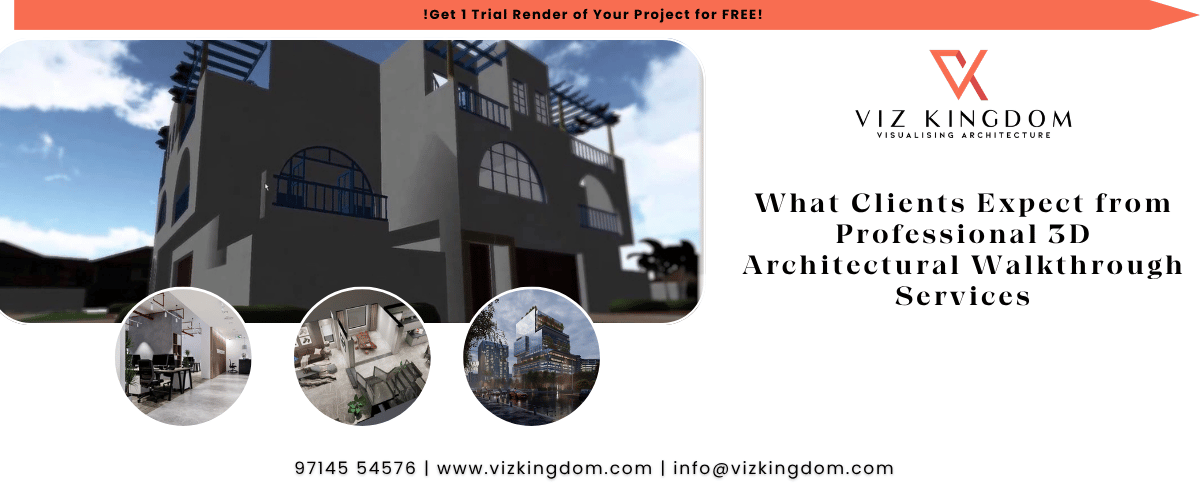
What Clients Expect from Professional 3D Architectural Walkthrough Services
In the rapidly expanding real estate and construction industries in the US, traditional blueprints and 2D floor plans no longer serve as the primary method for closing high-value deals.
Nowadays, besides luxury home buyers in Miami, property developers in New York and other stakeholders want an immersive experience. This change has made 3D architectural visualization walkthrough services a focal point of the design and sales process.
Most importantly, when clients hire a top-notch studio, they are not just wanting a digital video; they want a strategic tool that makes a direct link between imagination and reality.
Below is a thorough look at what clients really want from a professional visual architect in 2026.
1. Photorealism Meets Feeling
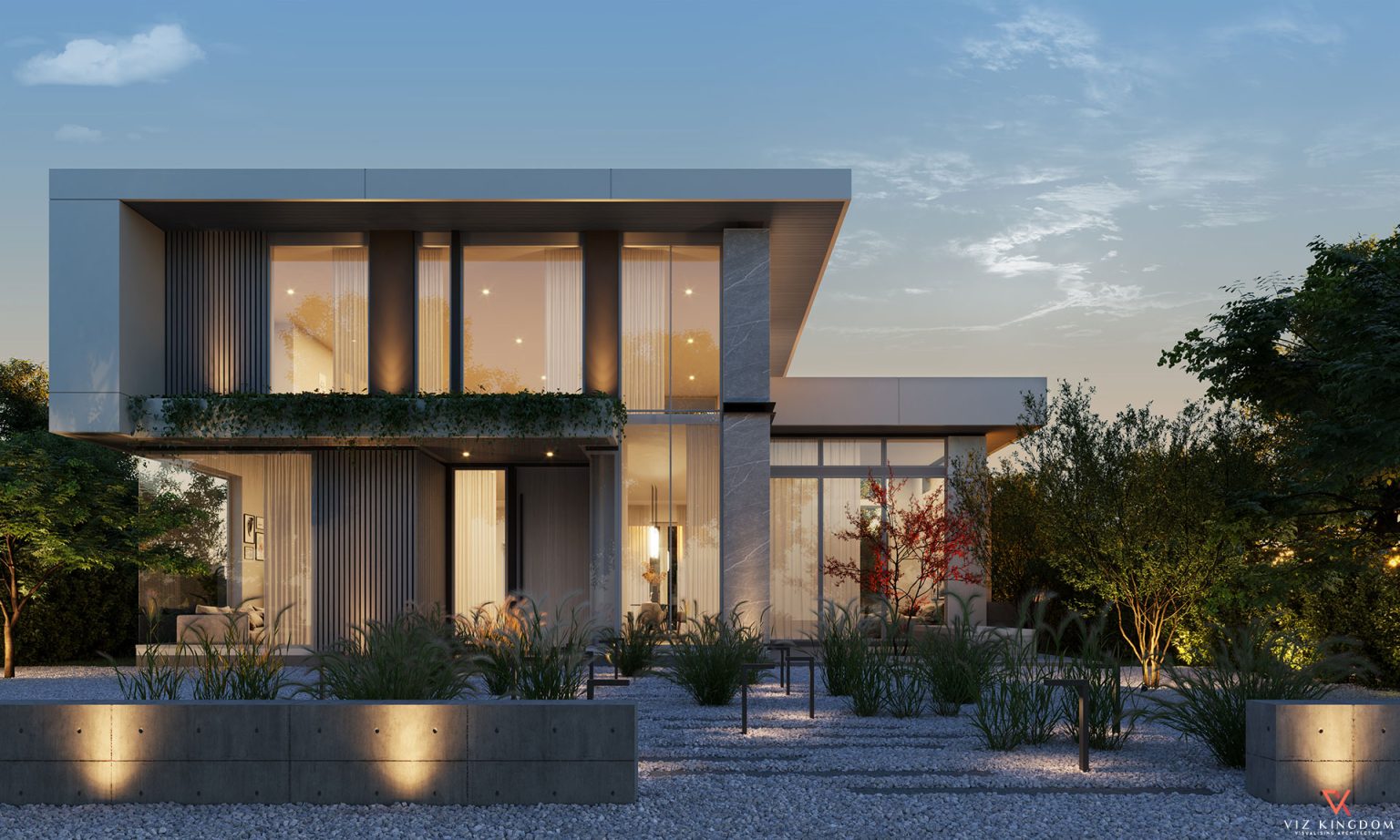
Floating through the scene, sunlight at dusk strikes the wood perfectly, highlighting each grain. Clients no longer have to guess how daylight affects space; they see it in real time. Marble changes appearance as shadows grow longer. The most important thing is experiencing reality before construction starts.
A room changes when someone designs it with intention. At Viz Kingdom, the person who creates visuals doesn’t just draw walls on paper. They determine how light travels through a room.
- Ceiling height alters mood.
- Some corners can hold silence.
- Materials show texture before you touch them.
- Shadows are arranged like pieces of furniture.
- Airflow is included in the plan.
Every line influences breathing and how people move. A look shifts based on where windows open. A shaky zoom moves into a slow pan, like something from a theater screening. Motion never stops, connecting shots like big movies do. Each transition is timed exactly, not too fast, not too slow. Sequences play one after another, built to attract attention without showing every detail at once.
Leaves tremble behind the house, stirred by a breeze most people never notice. Shadows shift across the grass, slow then sudden. Sounds linger just beyond hearing – distant voices, faint music, things you almost recognize. These moments piece together something that feels quietly alive.
2. Design Validation
For developers in the USA, an architectural visualization walkthrough acts as a strong insurance policy, at least in theory. One key goal is finding design flaws before any brick is laid.
And clients use these walkthroughs to see how spaces connect inside a home.
- They evaluate if hallways are narrow and whether the kitchen and living areas flow well. (They also assess different siding colors or paint tones to see real-time visual results.)
- They verify ceiling heights match furniture dimensions, so costly changes aren’t needed after construction starts.
This reduces major on-site modifications later. It cuts down the risk of surprise issues during building phases.
3. Interactive and Immersive Technology
By 2026, users no longer prefer passive videos. They want to actively interact with content. Clients are pushing for 360 Virtual Tours and VR features. The thing is, it seems hard to ignore how much people enjoy controlling their experience. Can you imagine pausing during a walk, turning around in a room, or focusing on a small detail? They want to decide when and how they explore.
Viz Kingdom offers interactive VR rendering. This lets an investor in London view a property project in Los Angeles as if present. They can check each light, floor tile, or wall panel. (It probably helps remote teams who can’t travel.)
4. Strategic Marketing and Sales Support
Presentation can be a key tool in helping sales in competitive markets. For example, a real estate developer would like a property walkthrough to be the main engagement of buyers.
- Real estate with immersive video was found to sell on average up to 20% faster, and the value of such properties would also be likely to be higher, especially if videos are shared online.
- In fact, clients have an expectation of their visualization partner providing marketing-ready content, 4K videos specifically optimized for Instagram and YouTube.
5. Hassle-free Communication and Global Expertise
A strong visual story simplifies technical details and builds investor confidence. This helps secure funding or win city council approval because it clearly shows design intent and project benefits.
- Communication flows smoothly across international markets. U.S. clients often hire studios such as Viz Kingdom because they offer solid visual results at controlled prices.
- Pricing is direct; there are no unexpected fees or vague add-ons. Clients demand full transparency from the start.
- Projects must be delivered on time. In construction, delays directly affect budgets. Studios rely on fast render systems to meet strict schedules without dropping below 30fps.
- Architects must read CAD and DWG files precisely. They need to build accurate 3D models that match the actual design exactly.
- There’s no room for error when translating technical plans into visuals. The final image has to represent the structure as it was intended.
- Studios work under tight timelines and keep detailed records of every step. Every change is noted, every file is tracked.
The output must stay true to the original design documents at all times.
Conclusion
A professional walkthrough for 3D architectural visualization is not optional anymore. It’s essential for today’s architecture. Clients want a partner who knows both the technical structure and the creative heart of a home.
Selecting a studio like Viz Kingdom gives clients in the USA and worldwide access to a team focused on quality, clear communication, and real-time rendering. When those standards are reached, the outcome goes beyond a video. It becomes a lived-out vision.
It seems hard to ignore how this approach improves client confidence and project clarity.
Testimonials

Viz Kingdom work has become an essential part in Sameer Design consultants architectural work presentations. The quality of 3D renderings are high with reasonable prices. Viz Kingdom team quickly understands our architectural 3D comments and not only respond accordingly, but also add their inputs to come up with quality work within a short period of time. I highly recommend them.
Sameer Akbar, UAE
Professional service with excellent results. We used Viz to produce 3D architectural renderings for a development project. This was used in marketing materials and greatly assisted in our sales strategy. We have used them now for several projects and would recommend them strongly.
Binoy Karia, UK

I am a professional sculptor who creates monuments in outdoor public spaces. Therefore, I needed architectural 3D design renderings which depicted my sculptures within the future environmental settings where they will permanently reside. I was referred to Viz Kingdom via a mutual business associate, and I was not disappointed. They were very accommodating with all of my requests, even though I provided them with very short notice of my project. They took direction well, were very accessible (despite being overseas), and were also good at anticipating my design objectives. As an artist, it is important for me to collaborate with those who have ann ability to easily interpret my concepts, and this company seamlessly proved strong in that regard. I would definitely recommend their architectural visualization services to my fellow associates.
Alvin, New Jersey, USA
Kaushik and his team have served me and my clients very well over the years. Since we started working together several years ago Kaushik and his team have never failed to amaze me with their level of quality and attention to detail. Their work is amazing and highly effective for helping clients and contractors visualize our vision for various commercial and residential projects. It is without any reservations that I recommend Kaushik and his team to help you with professional renderings. 5 STARS!
Frank Cunha III, USA
My journey with Vizkingdom began with a simple search for 3D animation walkthrough services. However, it quickly evolved into a truly rewarding and collaborative experience. The team's genuine passion for architectural visualization was evident from the outset, and their enthusiasm was contagious. The final product exceeded my expectations and served as a powerful tool for effectively communicating my design intent to stakeholders and potential investors. Their dedication to clear communication and unwavering commitment to client satisfaction ensured a smooth and successful project from start to finish.
Creative Grid 7, Australia
Viz Kingdom's communication was excellent throughout the entire project. They kept me updated on the progress and made sure I was happy with the final results.
Zaga Skerletovic, USA

Very professional services, quick turn-around, great 3D visualization services, outstanding architectural 3D renderings
Bill Brown, USA
"I had a rather challenging backyard project that Kaushik @Viz Kingdom remarkably delivered from scratch. He was very patient to listen to my concerns and execute likewise. I can’t think of a better visualization than this. I would certainly recommend him for his expertise in 3d visualization eyes closed. Also would like to work with him in my future projects as well."
Abhilash Raveendran, Senior coordinator at Ceeyem, India

"I am working with Viz Kingdom since August 2017. He has always provided me high-end architectural visualization. Even without any meeting to discuss work or telephonic explanation of work he has understood the work very well and has given us the desired output. He has always achieved to deliver the renders on time, without exception. I definitely recommend him for his expertise in the work he does."


 USA
USA UK
UK Australia
 UAE
UAE Canada
 Spain
Spain